Why Does Co-Requisite Remediation “Work”?

Our academic leaders and policy makers continue to get strongly worded messages about the great results using co-requisite remediation.  Led by Complete College America (CCA), the originators of such messages suggest that this method avoids the failures of developmental mathematics.   [For example, see http://completecollege.org/spanningthedivide/#remediation-as-a-corequisite-not-a-prerequisite] Those of us in the field need to understand why intelligent people with the best of intentions continue to suggest this uni-directional ‘fix’ for a complex problem.  #CCA #CorequisiteRemediation

I want to focus on the educational component of the situation — not the political or fiscal.  In particular, I want to explore why the co-requisite remediation results have been so encouraging to these influencers.

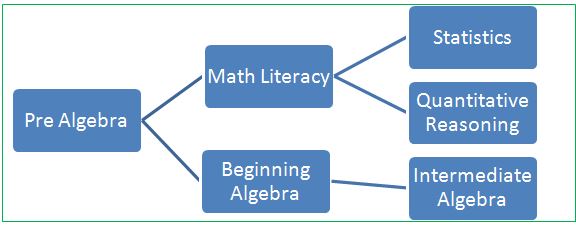
One of the steps in my process was a nice conversation with Myra Snell.  I’ve known Myra for a while now, and she was involved with the New Life Project as well as the Carnegie Foundation’s Statway work.   What I got from this conversation is that Myra believes that there is a structural cause for the increased ‘throughput’ in the co-requisite models.  “Throughput” refers to the rate at which students complete their college math requirement.  Considerable data exists on the throughput using a traditional developmental math model (pre-algebra, beginning algebra, then intermediate algebra); these rates usually are from 7% to 15% for the larger studies.  In each of the co-requisite systems, the throughput is usually about 60%.  Since the curriculum varies across these implementations, Myra’s conclusion is that the cause is structural … the structures of co-requisite remediation.

The conclusion is logical, although it is difficult to determine if it is reasonable.  Scientific research in education is very rare, and the data used for the remediation results is very simplistic.  However, there can be no question that the target of increased throughput is an appropriate and good target.  In order for me to conclude that the structure is the cause for the increased results, I need to see patterns in the data suggesting that ‘how well’ a method is done relates to the level of results … well done methods should connect to the best results, less well done methods connect with lower results.  A condition of “all results are equal” does not seem reasonable to me.

Given that different approaches to co-requisite remediation, done to varying degrees of quality, produce similar results indicates some different conclusions to me.

  • Introductory statistics might have a very small set of prerequisite skills, perhaps so small a set as to result in ‘no remediation’ being almost equal to co-requisite remediation.
  • Some liberal arts math courses might have properties similar to intro statistics with respect to prerequisite skills.
  • Some co-requisite remediation models involve increased time-on-task in class for the content of the college course; that increased class time might be the salient variable.
  • The prerequisites for college math are likely to have been inappropriate, especially for statistics and liberal arts math/quantitative reasoning.
  • Assessments used for placement are more likely to give false ‘remediation’ signals than they are false ‘college level’ signals.

Three of these points relate to prerequisite issues for the college math courses used in co-requisite remediation.  Briefly stated, I think the co-requisite results are strong indictments of how we have set prerequisites … far too often, a higher-than-necessary prerequisite has been used for inappropriate purposes (such as course transfer or state policy).  In the New Life model, we list one course prior to statistics or quantitative reasoning.  I think it is reasonable to achieve similar results with the MLCS model; if 60% of incoming students place directly in the college course … and 40% into MLCS, the predicted throughput is between 55% and 60%.  [This assumes a 70% pass rate in both courses, which is reasonable in my view.]  That throughput with a prerequisite course compares favorably to the co-requisite results.

The other point in my list (time-on-task) is a structural issue that would make sense:  If we add class time where help is available for the college math course, more students would be able to complete the course.  The states using co-requisite remediation have provided funds to support this extra class time; will they be willing to continue this investment in the long term?  That issue is not a matter of science, but of politics (both state and institution); my view of the history of our work is that extra class time is usually an unstable condition.

Overall, I think the ‘success’ seen with corequisite remediation is due to the very small sets of prerequisite skills present for the courses involved along with the benefits of additional time-on-task.   I  do not think we will see quite the same levels of results for the methods over time; a slide into the 50% to 55% throughput rate seems likely, as the systems become the new normal.

It is my view that we can achieve a stable system with comparable results (throughput) by using Math Literacy as the prerequisite course … without having to fail 40% of the students as is seen in the corequisite systems.

 
Join Dev Math Revival on Facebook:

Rational Expressions … Easy Reducing, or “They’re Just Symbols”

For our intermediate algebra course, I am grading the test on rational expressions; in general, this is my least favorite test to grade.  One of my students provided a bit of unintentional humor, however; at least, it was funny for a minute.

Here is the problem and the student’s work:

Reducing Rational Expression the Eazy Way


So, what you are seeing here is that the student combined the numerators (fine) and added a half space in one term in the denominator, which caused “4k – 5” to be seen as “4 k-5”.  Reducing fractions the easy way!!

Fortunately, most students are actually doing okay with this test.  This problem has been on my tests before, and this is the first time I’ve seen that ‘method’.  I think this illustrates a generality about our students and fractions of any kind:

Students will deal with fractions at the symbolic level only, whenever possible.  Meanings are not attached, in general.

If you are curious, I start our work with rational expressions with an activity where we explore the meaning of the ‘fraction bar’ and the role of factors in simplifying.  That activity does shift students thinking a bit towards the meaning, though clearly not always :).

 Join Dev Math Revival on Facebook:

Implementing Better Math Courses, Part I: A Starting Point

I want to share some specific options for implementing courses from the New Life Project, both to encourage more people to consider using those courses and to also increase our collective understanding of changes in the field.  In this Part I, I’ll talk about the easiest implementation; later parts will describe increasingly complete replacements of the traditional curriculum.  #NewLifeMath #MathLiteracy

The easiest curriculum reform to implement is often the side-by-side approach, also called ‘pathways’.  In this structure, the existing courses are left intact but some students are referred out of beginning algebra … based on a target of either statistics or quantitative reasoning.

This pathways model looks something like this:

ImplementationMap LOW March2016


Overall, about half of the known implementations of New Life courses is done within this ‘low’ implementation (side-by-side, or pathways).

The advantages of the low (pathways) implementation are:

  • Easier to get ‘buy-in’ from other math faculty
  • Allows for learning process (for teaching differently, with different content)

Some of the disadvantages are:

  1. Depends upon effective advising for ‘recruiting’ students
  2. Complicated structure and communication
  3. Perhaps too easy to get buy-in from other math faculty
  4. Provides benefits to some students, while the remainder experience an unimproved curriculum

In general, this pathways model (also called ‘low implementation’) is done by colleges.  When states implement the courses, they usually do so at the next level — replacing beginning algebra with “MLCS”.  In my view, the pathways (side-by-side) structure is not sufficiently stable to survive long-term.  As in my institution, however, this pathways model allows a math department to begin the process of curriculum reform without major disruptions.

The disadvantages listed for this model may actually be an advantage for some institutions.  In coping with the advising and communication challenges, the college may see improvements in those general processes.  I’ve heard of those types of outcomes happening at some institutions, though the positive outcomes depend upon good planning and lots of hard work; in my institution, for example, those disadvantages did not result in significant improvements in general systems.

Within the mathematics community, this pathways model is what ‘got traction’ a few years ago.  The side-by-side nature is not a long-term solution, and tends to reinforce that antiquated curriculum in college algebra or pre-calculus.  A more mature response to our curriculum would achieve some level of replacement; those replacement models will be explored when I talk about “medium” (MLCS instead of beginning algebra) and “high” (MLCS and Algebraic Literacy instead of traditional developmental algebra courses).

Overall, this pathways (side-by-side) low implementation model is an excellent choice for how to start the long-term process of improving our curriculum.  The key is to judge what your department and institution are ready for … pushing for a replacement of the old courses can be counter-productive, if the readiness is not there.  Once a department is working in the pathways model, we can more easily build the readiness for the replacement stages.

Nationally, the Carnegie Foundation’s Pathways (Quantway, Statway) are pretty much limited to the ‘low’ implementation; the purpose of those pathways is to accelerate math for students who are not in the ‘STEM’ path.  On the other hand, the Dana Center’s New Mathways Project is flexible enough to allow for both pathways (side-by-side) and replacement models.  Like the New Life project, the Dana Center work includes the MLCS course (called “Foundations of Mathematical Reasoning”, or FMR).  Differences emerge when we get to the replacement models.

If you are considering implementing a new course like MLCS or FMR, I hope the points above are helpful.  Feel free to leave a comment or send me an email for clarification or further information!

 Join Dev Math Revival on Facebook:

The Arithmetic Financial Aid Liability

At a session this week (at the National Math Summit), one comment led to some looks of surprise and follow-up discussion.  This comment dealt with the federal financial aid policies that our institutions are required to follow (if they accept any federal student aid money, which pretty much all colleges do). #ArithCollege #FinAid #NewLifeMath

Here is the basic idea:

Courses at a level below high school can not be counted to determine a student’s enrollment level (which determines their actual aid).   [See https://ifap.ed.gov/fsahandbook/attachments/1415Vol1Ch1.pdf on page 1-4]

In other words, courses primarily at the K-8 level can not be counted.  The determination of which category a given course belongs to … is left up to one of three bodies (a state legal authority, an accrediting body, or a state agency which approves vocational programs).  Two of those decision-making bodies are state level, while the other would normally be one of the regional accreditation bodies.

Perhaps you know what the determination is, within your state.  A logical assumption is that any course below the level of beginning algebra would be considered “K-8” level, and that this would include any arithmetic, basic math, or pre-algebra course.  One of the things I find interesting is that the information on this classification is very difficult to find.

In my own state (Michigan), we do not have a state legal authority for higher education; there is an office for reporting higher education data, and they do not classify remedial courses by level (K-8 or high school).  We have an agency responsible for vocational programs, but they make no determination (as far  as I can tell) about remedial course work.  Our accrediting body (HLC) does not have an answer.  In our college, our administration asked the math department to classify each course.

As remedial education remains in the spotlight, we can expect some added scrutiny based on the financial aid regulations.  Can we defend, with professional integrity, a position that a course in arithmetic or basic math or pre-algebra is ‘at the high school level’?  This is not a question of whether such courses exist in high schools; high schools offer a wide variety of courses, and some of them are below or above high school level.  The issue here is more about standards and expectations:  are students expected to have mastered arithmetic, basic math and pre-algebra before they reach the 9th grade?  From all perspectives that I am aware of, the answer is ‘yes’.

Of course, financial aid rules should not determine what courses we offer in a given college.  [Sadly, at my institution, that is exactly what happened this year.]  However, we have considerable evidence that offering courses at the K-8 level results in more damage than benefits.  Part of this evidence comes from the completion studies, which generally show single-digit completion for those who start in the K-8 math courses; this is for completion of a college-level math course within an extended period (often 3 years in the data).

Another source of evidence against offering K-8 level math courses comes from more scientific progression data.  Over a 40 year period, I’ve checked this progression data at my institution; I’ve never seen a benefit for passing a pre-algebra course prior to algebra … the data does not even show a ‘level playing field’.  Part of the problem contributing to this progression issue is that most courses in arithmetic or basic math or pre-algebra are very skill & procedure oriented.  Our courses and books focus almost exclusively on calculating answers (along with fairly routine ‘applications’), and this approach does not provide any preparation for courses which follow.

I see this as a situation where our best option is over-determined:  We should stop offering K-8 level math courses in college.

If we can justify requiring students to learn specific content from the K-8 mathematics, we should provide those in an accelerated or pre-requisite method.  My own conjecture is that there is a limited set of such content required in college, perhaps equivalent to 3 weeks of a regular course; we can use boot camps or just-in-time remediation, and get better results than our old system of separate course(s) at the K-8 level in college.

 Join Dev Math Revival on Facebook:

WordPress Themes